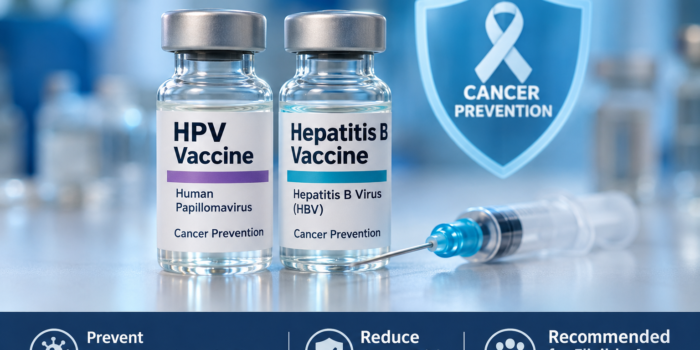
Vaccines that prevent cancer work by preventing infections that can lead to cancer years later. Two important examples are HPV vaccination and hepatitis B vaccination.
Positive Lymph Nodes After Colon Cancer Surgery: What the Report Means
CancerSnoop Test Guide
Positive Lymph Nodes After Colon Cancer Surgery: What the Report Means
A positive lymph node contains cancer cells. When a report lists two of eighteen nodes as positive, cancer was found in two of the eighteen nodes examined. The full stage also depends on the tumor and whether cancer has spread to distant sites.
| Test Name | Regional lymph node examination |
|---|---|
| Test Type | Surgical pathology |
| What It Measures | Whether sampled regional lymph nodes contain cancer cells and how many examined nodes are involved. |
| Used For | Assigning the regional lymph node category and informing discussions about stage and treatment after surgery. |
| Cancer Types | Colon cancer |
How to read the two numbers
A line such as “2 of 18 lymph nodes positive” means cancer was found in two of the 18 nodes the pathologist examined. The first number describes involvement in the specimen. The second tells you how many nodes were assessed. Neither number counts every lymph node in the body. If a separate line mentions tumor deposits, ask the team to explain that finding alongside the node count. [1] [2]
Where the lymph node result fits into TNM
T describes the primary tumor and how far it has grown. N describes regional lymph node involvement and can account for certain tumor deposits. M describes distant spread. Colon cancer involving regional nodes without distant spread falls within stage III. The precise stage grouping depends on the combination of findings. The pathology report gives important information about T and N, while the team also considers the wider staging assessment. [1] [3]
Why the word regional matters
Regional nodes are defined for the primary site. A positive regional node shows that cancer reached a nearby node assessed as part of staging. To understand whether there is distant spread, look for the M category and ask which tests the team used to determine it. A positive regional node result by itself cannot answer the distant-spread question. [1] [3]
How the finding affects the next conversation
After surgery, the oncology team uses the stage and other findings to discuss whether additional treatment is appropriate. Ask how the node result affected the stage and which other findings matter for the recommendation. Two people who have the same number of positive nodes can have different tumor findings or health considerations, so the number alone cannot determine a treatment plan. [1] [2]
What to ask when the report uses unfamiliar codes
Bring the final pathology report and ask the team to translate the T, N and M categories one by one. Ask whether staging is complete, what the stage means for the proposed treatment and whether any remaining test results could change the plan. If you were given an earlier stage before surgery, ask which new information contributed to any change. [2] [3]
Does a positive node change the result for the surgical margins?
The pathologist records the margins and the nodes separately. Both findings help the team discuss the stage and what to do after surgery. [2]
This guide is for general education. Your care team can interpret your individual results.
Sources and References
Continue Exploring