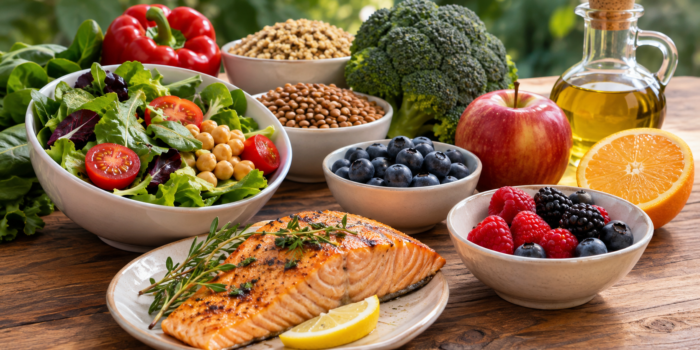
Food choices influence the risk of some cancers, but there is no single cancer-proof diet. The strongest evidence concerns whole grains and fiber, processed meat, alcohol and long-term dietary patterns.

Does Vitamin C Cure Cancer? What Does the Science Say?
CancerSnoop Claim Check
At a glance
Does Vitamin C Cure Cancer? What Does the Science Say?
Vitamin C is widely known as an essential nutrient with antioxidant properties, and it is sometimes claimed that it can cure cancer. This raises an important question: Can vitamin C actually cure cancer, or is this a misconception?
Here, we examine scientific evidence about vitamin C's role in cancer treatment and prevention to help clarify this important issue.
CancerSnoop Verdict · FALSE
The claim being investigated — not an established fact
The claim under investigation is that vitamin C cures cancer.
Why this verdict?
Extensive research and clinical data do not support vitamin C as a cure for cancer. Although vitamin C may have preventive and complementary roles, there is no adequate direct evidence that it alone cures cancer.
Both historical and recent studies have failed to demonstrate definitive therapeutic benefit or safety of high-dose vitamin C as cancer treatment, and expert consensus advises against its use as a sole cancer therapy Reference 3Reference 4Reference 5.
Evidence coverage
This assessment uses 5 retrieved PubMed abstracts. Full methods and the wider evidence base were not independently reviewed.
The Short Answer
Currently, there is no strong clinical evidence that vitamin C cures cancer. Although vitamin C has important biological roles and may support cancer treatment as a complementary agent, it is not proven to cure any type of cancer by itself.
Where Did the Claim Come From?
origin not supplied
What Does Research Support?
Vitamin C is vital for multiple metabolic functions and acts as an antioxidant protecting the body from oxidative damage. Research has explored its potential impact on disease prevention and treatment, including cancer.
Reviews indicate that the beneficial effects of vitamin C in human cancer treatment remain uncertain and unproven as a cure Reference 3. Clinical studies examining very high doses of vitamin C (megadoses) have yielded no conclusive evidence of therapeutic benefit and have raised safety concerns, so such use is not currently recommended outside medical supervision Reference 5.
Some studies have investigated high-dose intravenous vitamin C as an adjunct to breast cancer therapies, suggesting it may enhance drug activity or reduce side effects, but these findings support vitamin C's role as a supportive therapy, not as a standalone cure Reference 4. Additionally, vitamin C is noted among antioxidants that can impact mitochondrial function and oxidative stress in diseases, including cancer, but this does not establish it as a cure Reference 1.
What Do We Know in People?
Epidemiological studies suggest that consuming vitamin C-rich foods may help reduce the incidence of some cancers, indicating a preventive role rather than a curative effect Reference 5. Clinical trials testing vitamin C supplements have not demonstrated that vitamin C alone can eradicate cancer.
Some clinical investigations explore vitamin C to improve the effectiveness or tolerance of standard cancer treatments, positioning vitamin C as a complementary agent rather than a curative one Reference 4. Thus, while vitamin C supports general health, there is no strong human evidence that it cures cancer.
What Remains Unproven?
Much of the evidence derives from laboratory or animal studies, which cannot confirm benefits for human cancer patients. Clinical trials vary widely in vitamin C dose, administration route (oral versus intravenous), cancer types studied, and control measures, limiting comparability and strength of conclusions.
Historical studies on high-dose vitamin C have methodological issues and safety concerns Reference 5. Traditional medicine reports on vitamin C-rich plant extracts often lack dosage details and mechanistic explanations, further limiting interpretability Reference 2.
Overall, current evidence is insufficient to affirm vitamin C as a cure for cancer in humans.
Could Following This Claim Cause Harm?
Typical dietary intake of vitamin C is safe for most people. However, use of very high doses, especially without medical oversight, may pose health risks Reference 5.
Unsupervised consumption of large vitamin C doses might interfere with standard cancer treatments or delay patients from receiving proven therapies. While vitamin C itself is not documented to cause direct harm in cancer, reliance on it as a sole curative agent can lead to harm through missed or delayed effective treatments.
What Should You Ask Your Care Team?
Patients and caregivers should discuss with their healthcare team whether vitamin C supplementation is appropriate during cancer treatment. Questions include: Could vitamin C supplements interact with my cancer therapy?
Are there benefits or risks of taking vitamin C at standard or high doses in my situation? Can vitamin C help improve quality of life or reduce side effects?
It is important to disclose any supplement use to medical providers to ensure safe, coordinated care. Decisions regarding vitamin C should be guided by professional medical advice, not by unproven claims.
CancerSnoop Verdict · FALSE
Vitamin C is an important nutrient with antioxidant properties and may play a supportive role in cancer care. However, scientific evidence does not support the claim that vitamin C cures cancer.
While diets rich in vitamin C may contribute to cancer prevention, vitamin C supplements—especially in high doses—have not been proven to eliminate cancer. The current research supports using vitamin C as a complementary agent rather than a curative treatment in oncology.
Patients should rely on evidence-based therapies and consult their healthcare providers before starting vitamin C supplements.
Sources and References
Reference 1
Mitochondrial biogenesis: pharmacological approaches.
Current pharmaceutical design · 2014 · PMID 24606795
Reference 2
Journal of ethnopharmacology · 2022 Jan 10 · PMID 34480995
Reference 3
Vitamin C in disease prevention and cure: an overview.
Indian journal of clinical biochemistry : IJCB · 2013 Oct · PMID 24426232
Reference 4
International journal of molecular sciences · 2020 Nov 09 · PMID 33182353
Reference 5
Vitamin C and cancer. How convincing a connection?
Postgraduate medicine · 1985 Nov 15 · PMID 3903707
Educational information. Discuss decisions about cancer care with your care team.
Continue Exploring