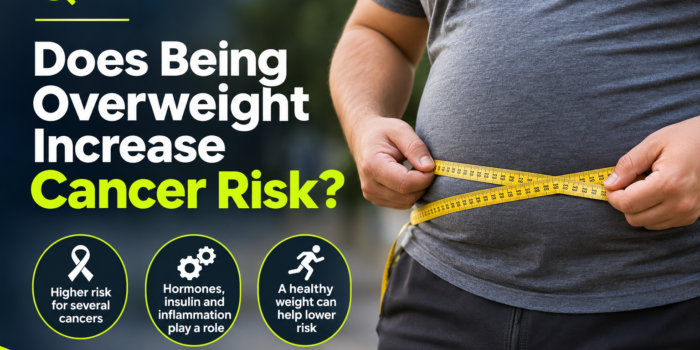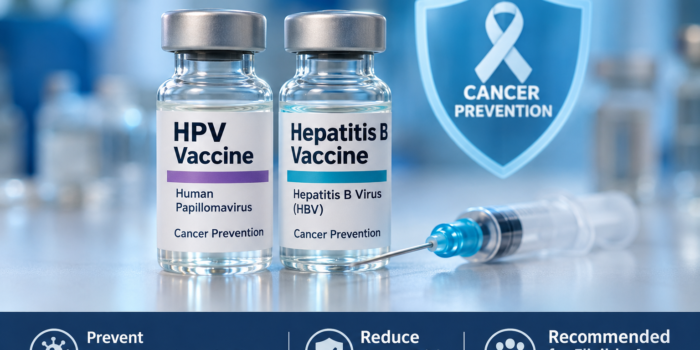
Excess body fat is linked to several cancers. Intentional weight management may reduce some risks, but the evidence differs by cancer type and no outcome can be guaranteed.
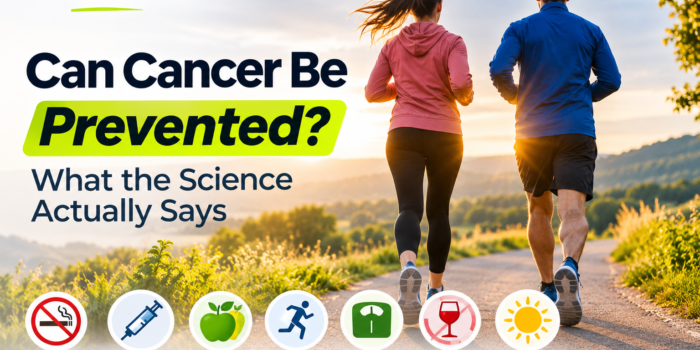
Can Cancer Be Prevented? What Science Actually Says
CancerSnoop · Cancer Prevention
Can Cancer Be Prevented? What Science Actually Says
Cancer prevention is possible for some cancers, but no action guarantees that a person will never develop cancer. Genes, age, infections, environmental exposures and chance all contribute to risk.
Can cancer be prevented is best understood through evidence, realistic expectations and practical choices. This guide explains what research can tell us and where uncertainty remains.
Can cancer be prevented: what the evidence says
Prevention research compares disease rates across groups with different exposures. Tobacco is a clear cause of several cancers, while vaccination against cancer-causing infections can prevent particular cancers. Other choices, such as maintaining a healthy weight and being physically active, are associated with lower risk for several cancer types. These effects vary by cancer and individual circumstances.
How to interpret prevention research
Researchers use different kinds of evidence. Randomized trials can test interventions but may be impractical for outcomes that take decades to appear. Prospective cohort studies can track people over time, yet lifestyle factors often overlap. Mechanistic studies can explain how a risk factor might work without proving that an intervention prevents cancer in people. Reliable guidance weighs these sources together and acknowledges uncertainty.
Practical steps for can cancer be prevented
A practical prevention plan starts with avoiding tobacco, discussing recommended vaccinations, limiting alcohol, protecting skin from excessive ultraviolet radiation and following age-appropriate screening advice. Changes that are sustainable matter more than extreme short-term programs.
Build a sustainable prevention plan
If you are deciding what to change after reading about can cancer be prevented, begin with one measurable step. Write down what you can control, what needs a professional recommendation and what cannot be changed. Review your progress over months rather than days. Avoid products that promise to “detox” cells, reverse all mutations or make screening unnecessary. There is no validated shortcut that replaces established prevention strategies.
What can cancer be prevented cannot guarantee
Risk reduction is not a promise. People who follow every recommendation can still develop cancer, and people with risk factors may never develop it. Screening can detect cancer or precancerous changes; it is not the same as preventing every cancer.
Personal risk is not the same as population risk
The phrase “can cancer be prevented” can be misleading when a headline turns a population trend into a personal prediction. Research usually estimates average risk across large groups. Your own risk can differ because of age, inherited variants, prior infections, medical history, environmental exposures and access to preventive care. A useful conversation with a healthcare professional considers the full picture rather than one isolated behavior.
Quick evidence checklist
| Question | What to check |
|---|---|
| Is it a proven cause or association? | Look for consistent human evidence and guidance. |
| Does it apply to everyone? | Consider age, health and individual risk. |
| Is a product being sold? | Be cautious of absolute prevention claims. |
Frequently asked questions
Can healthy people still get cancer? Yes. Can inherited risk be changed? Inherited variants cannot be changed, but genetic counseling may guide personalized surveillance or prevention.
When to seek personalized advice
People with a personal cancer history, a strong family history, an inherited cancer-predisposition syndrome or an immune-system condition may need advice different from general population guidance. Prevention recommendations also vary by country. If you notice a new lump, unusual bleeding, persistent unexplained pain or other concerning symptoms, seek clinical assessment instead of waiting for a routine screening appointment.
CancerSnoop bottom line
The bottom line on can cancer be prevented: focus on realistic risk reduction, not certainty. Choose actions supported by credible evidence, ask about individualized screening or vaccination when relevant, and treat dramatic online claims with skepticism. CancerSnoop separates what research supports from what it does not prove.
Sources and further reading
- who.int — news room/fact sheets/detail/cancer
- cancer.gov — about cancer/causes prevention
- wcrf.org — diet activity and cancer/cancer prevention recommendations
Educational information, not individual medical advice. Reviewed for clarity; source links should be rechecked before publication.
Continue Exploring