
Excess body fat is linked to several cancers. Intentional weight management may reduce some risks, but the evidence differs by cancer type and no outcome can be guaranteed.
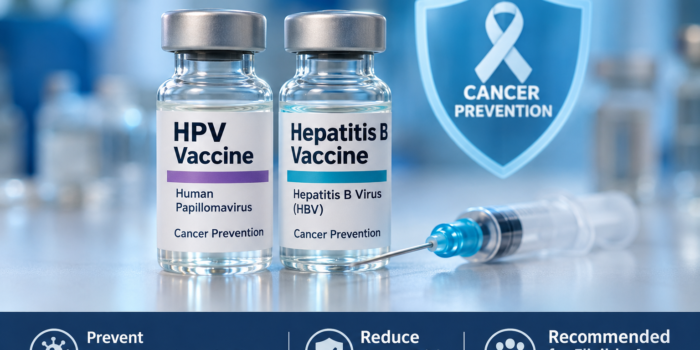
Can HPV and Hepatitis B Vaccines Prevent Cancer?
CancerSnoop · Cancer Prevention
Can HPV and Hepatitis B Vaccines Prevent Cancer?
Some cancers begin with infections that could have been prevented. HPV and hepatitis B vaccines offer a powerful way to reduce the risk of several cancers—often decades before they might develop.
Vaccines that prevent cancer are not a future possibility. Two vaccines already help prevent cancers caused by viral infections: the human papillomavirus (HPV) vaccine and the hepatitis B vaccine.
Unlike cancer treatments, these vaccines act before cancer develops. They protect against infections that can trigger long-term cellular damage and eventually lead to cancer.
But how effective are they? Which cancers can they help prevent? And does vaccination eliminate the need for screening?
Which vaccines can prevent cancer?
Two well-established vaccines have an important role in cancer prevention.
| Vaccine | Infection prevented | Cancer risk reduced |
|---|---|---|
| HPV vaccine | Certain high-risk human papillomavirus types | Cervical, anal, oropharyngeal, penile, vulvar and vaginal cancers |
| Hepatitis B vaccine | Hepatitis B virus (HBV) | Hepatitis B-related liver cancer |
These vaccines do not prevent every cancer. Their benefit comes from blocking specific infections that are known causes of cancer.
How does the HPV vaccine prevent cancer?
HPV is a common group of viruses. Most HPV infections disappear naturally within one or two years, but some high-risk infections persist.
Persistent infection can gradually produce abnormal cell changes. Over many years, some of these changes can develop into cancer.
The HPV vaccine trains the immune system to recognize selected HPV types before they establish an infection. Preventing infection interrupts the process that can eventually lead to cancer.
Which cancers are linked to HPV?
High-risk HPV infections can cause six types of cancer:
- Cervical cancer: almost all cases are associated with persistent high-risk HPV infection.
- Anal cancer: HPV is responsible for a substantial majority of cases.
- Oropharyngeal cancer: HPV can cause cancers affecting the tonsils and base of the tongue.
- Penile cancer: a proportion of cases are linked to HPV.
- Vulvar cancer: some cases arise from persistent HPV infection.
- Vaginal cancer: HPV is an important cause.
HPV vaccination therefore matters for both males and females, not only for people at risk of cervical cancer.
How effective is HPV vaccination?
According to the US National Cancer Institute, HPV vaccination has the potential to prevent up to 90% of cancers caused by HPV infection when vaccination coverage and protection are sufficiently high.
This does not mean that a vaccinated person has a 90% lower risk of developing any cancer. The estimate specifically concerns HPV-associated cancers.
Evidence from clinical trials demonstrates strong protection against targeted HPV infections and precancerous changes. Large population studies also show reductions in invasive cervical cancer among vaccinated groups.
Protection is greatest when vaccination occurs before exposure to HPV.
How does the hepatitis B vaccine prevent liver cancer?
Hepatitis B is a viral infection affecting the liver. Some infections become chronic, meaning the virus remains in the body for years.
Chronic hepatitis B can cause ongoing liver injury, cirrhosis and hepatocellular carcinoma, the most common type of primary liver cancer.
Hepatitis B vaccination prevents HBV infection and therefore reduces the risk of liver cancer caused by that infection.
Why is vaccination during infancy important?
Hepatitis B can pass from mother to child during childbirth. Infection acquired early in life carries a particularly high risk of becoming chronic.
The World Health Organization recommends a hepatitis B vaccine dose for all newborns as soon as possible after birth, preferably within 24 hours, followed by additional doses according to the vaccination schedule.
Preventing infection early can provide protection against serious liver disease decades later.
Does the vaccine prevent all liver cancer?
No. Liver cancer has several causes, including hepatitis C infection, alcohol-related liver disease and metabolic dysfunction-associated liver disease.
The hepatitis B vaccine protects against HBV infection. It does not eliminate liver cancer risks from unrelated causes or reverse damage caused by an existing chronic infection.
What does the scientific evidence actually show?
The evidence supporting these vaccines comes from several complementary sources, including randomized clinical trials, long-term population studies and public health surveillance.
HPV: fewer infections, precancers and cancers
Clinical trials first demonstrated that HPV vaccines prevent infections and precancerous lesions caused by targeted HPV types.
Later studies followed vaccinated populations long enough to measure actual cancer diagnoses.
For example, a nationwide Swedish study involving more than 1.6 million women found a substantially lower incidence of invasive cervical cancer among vaccinated women, particularly those vaccinated at younger ages.
The study was observational, so researchers adjusted for potential differences between vaccinated and unvaccinated groups. Its findings strengthen the evidence that HPV vaccination prevents cervical cancer.
Hepatitis B: preventing an established cancer cause
Hepatitis B is a well-established cause of hepatocellular carcinoma. Vaccination prevents HBV infection, including infections that could otherwise become chronic.
Long-term vaccination programs and population evidence support the role of hepatitis B immunization in reducing HBV-related liver cancer.
The important distinction is that vaccination prevents an infection that can cause cancer; it is not a treatment for liver cancer itself.
Who should receive these vaccines?
Recommendations depend on age, vaccination history, health conditions and national immunization programs.
HPV vaccination
Under US CDC recommendations:
- Routine vaccination is recommended at ages 11–12, and can begin at age 9.
- Catch-up vaccination is recommended through age 26 for people who were not adequately vaccinated.
- Some adults aged 27–45 may benefit after discussing individual circumstances with a healthcare professional.
- The number of doses depends on age when vaccination begins and certain immune-system conditions.
Other countries may use different schedules and eligibility criteria.
Hepatitis B vaccination
WHO recommends universal hepatitis B vaccination beginning at birth. Older children and adults who have not been vaccinated may also qualify for vaccination according to national guidance.
People with increased exposure risks, including certain healthcare workers and household contacts of people with hepatitis B, should discuss their vaccination status with a healthcare professional.
What cancer-preventing vaccines cannot do
Despite their proven benefits, HPV and hepatitis B vaccines have important limitations.
- They cannot treat an existing cancer.
- HPV vaccination does not clear an existing HPV infection.
- Hepatitis B vaccination does not cure chronic hepatitis B.
- Neither vaccine prevents every type of cancer.
- Vaccination does not replace recommended cancer screening or medical follow-up.
For example, people eligible for cervical cancer screening should continue following screening recommendations after HPV vaccination because some cancer-causing HPV types are not covered by the vaccine.
People with chronic hepatitis B may still require antiviral treatment and liver cancer surveillance based on their individual risk.
Are HPV and hepatitis B vaccines safe?
Both vaccines have extensive safety records and are routinely used in immunization programs worldwide.
Common reactions can include temporary pain or redness at the injection site, fatigue, headache or mild fever. Serious allergic reactions are rare.
HPV vaccination is generally postponed during pregnancy. People with a history of severe allergic reactions to vaccine components should seek medical advice before vaccination.
As with other preventive interventions, the decision should consider established benefits, known risks and individual contraindications.
Frequently asked questions
Can a vaccine really prevent cancer?
Yes. HPV and hepatitis B vaccines prevent infections that can lead to cancer. Evidence supports reductions in specific infection-related cancers, not universal protection against cancer.
Can adults still benefit from HPV vaccination?
Some can. The benefit depends partly on previous HPV exposure and future infection risk. Vaccination cannot treat infections already acquired.
Does HPV vaccination replace cervical screening?
No. Vaccinated people should continue screening according to applicable national recommendations.
Can hepatitis B vaccination help someone already infected?
The vaccine does not treat an established hepatitis B infection. People with chronic HBV should receive appropriate medical assessment and discuss antiviral treatment and liver monitoring.
Are there vaccines for other cancers?
Researchers are investigating vaccines designed to prevent or treat other cancers. However, experimental therapeutic cancer vaccines are different from established preventive HPV and hepatitis B vaccines. Their effectiveness must be evaluated separately.
CancerSnoop bottom line
Verdict: SUPPORTED — Strong evidence.
HPV and hepatitis B vaccines are established tools for preventing certain infection-related cancers.
HPV vaccination reduces the risk of several HPV-associated cancers, while hepatitis B vaccination helps prevent liver cancer caused by chronic HBV infection.
The strongest protection generally comes from vaccination before exposure. Neither vaccine guarantees that cancer will never develop, and neither replaces recommended screening or treatment.
The evidence-based conclusion: preventing a cancer-causing infection can prevent cancers that might otherwise develop years or decades later.
Sources and further reading
- National Cancer Institute — Human Papillomavirus (HPV) Vaccine
- National Cancer Institute — Cervical Cancer Prevention (PDQ): Evidence and population studies
- World Health Organization — Hepatitis B: Transmission, vaccination and liver cancer
- Centers for Disease Control and Prevention — HPV Vaccine Recommendations
Last reviewed: November 16, 2026. Educational information only. Vaccination and screening decisions should follow current local recommendations and individual medical advice.
Continue Exploring