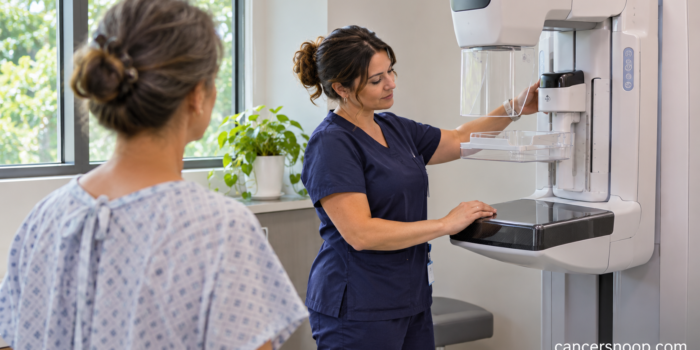
A mammogram after lumpectomy looks for changes in the remaining breast tissue. After breast-conserving surgery and radiation, the first examination is often scheduled about 6 to 12 months after radiation ends. Confirm your timing with the team that manages your follow-up.
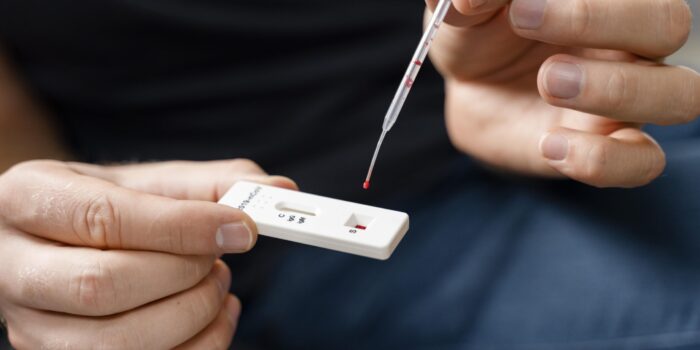
Positive FIT Test: What It Means and What Happens Next
CancerSnoop Test Guide
Positive FIT Test: What It Means and What Happens Next
A positive FIT means the test detected blood in your stool sample. The recommended next step is a colonoscopy to find out where it came from.
| Test Name | Fecal immunochemical test (FIT) |
|---|---|
| Test Type | Stool-based screening test |
| What It Measures | FIT detects human hemoglobin, a protein in red blood cells. It can detect small amounts of blood that you cannot see. |
| Used For | Screening for colorectal cancer. A positive result is followed up with a colonoscopy. |
| Cancer Types | Colorectal cancer |
| Typical / Reference Range | Use the result and reporting threshold supplied by the laboratory or screening program. |
Why a positive result needs a different test
FIT is a screening test. It asks whether a stool sample contains enough blood to cross the laboratory’s reporting threshold. It cannot show where that blood entered the stool. Colonoscopy answers a different question by letting the clinician examine the lining of the colon and rectum. During the same procedure, the clinician can often remove a polyp or take a sample from an area that needs a closer look. [1]
Can I repeat the FIT if I feel fine?
A second kit tests a different sample. If that result is negative, it does not identify the source of blood detected in the first sample. The same applies if you suspect hemorrhoids. You can mention them when you book the appointment, but the screening result still needs the recommended follow-up. Ask the clinician or screening program which team will arrange the colonoscopy. [1]
What researchers found when people did or did not complete follow-up
Researchers followed people who had a positive FIT in an Italian screening program. Among 88,013 people who completed colonoscopy through the program, the estimated ten-year colorectal cancer mortality was 6.8 per 1,000. Among 23,410 people who did not complete it through the program, the estimate was 16.0 per 1,000. Those figures describe deaths from colorectal cancer in the study groups, rather than the chance that your own positive test means cancer. The study was observational, so differences between the groups may also have influenced the results. [2]
| Group | Deaths per 1,000 |
|---|---|
| Completed colonoscopy through the program | 6.8 |
| Did not complete it through the program | 16.0 |
How quickly should I arrange follow-up?
A systematic review found that long delays after positive stool testing were associated with more colorectal cancers and more advanced disease at diagnosis. The included studies compared different waiting periods, and the results cannot establish an exact safe deadline for an individual. Contact the ordering team to arrange the next step. If you have been referred but have no appointment, ask whom to contact to track the referral. [3]
What to ask before and after the colonoscopy
Before the procedure, ask when you will get the bowel preparation instructions and whom to call about your regular medicines. Afterward, ask whether the examination was complete and whether anything was removed or sampled. A verbal summary of what the clinician saw and a later pathology result are two different pieces of information. If tissue was sent to the lab, ask when the result will be available and who will explain the follow-up plan. [1]
Does a positive FIT tell me how much bleeding there is?
FIT reports what it detected in one sample. Even if your report includes a number, it cannot identify the source. Ask the clinician how the result is reported by your screening program. [1]
This guide is for general education. Your care team can interpret your individual results.
Sources and References
- Colonoscopy after Positive FIT Test Cuts Risk of Colorectal Cancer Death
- Non-compliance with colonoscopy after a positive faecal immunochemical test doubles the risk of dying from colorectal cancer
- Association Between Time to Colonoscopy After Positive Fecal Testing and Colorectal Cancer Outcomes: A Systematic Review
Continue Exploring