
Food choices influence the risk of some cancers, but there is no single cancer-proof diet. The strongest evidence concerns whole grains and fiber, processed meat, alcohol and long-term dietary patterns.
Can a ketogenic diet cure cancer?
CancerSnoop Claim Check
At a glance
Can a ketogenic diet cure cancer?
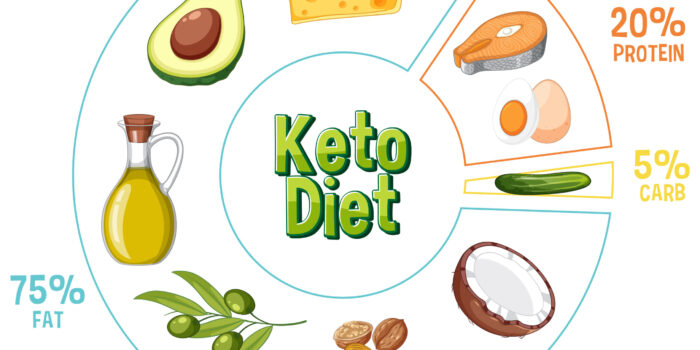
People often ask whether a ketogenic diet can cure cancer, hoping for new and less toxic approaches to this serious disease. The ketogenic diet is a very low-carbohydrate, high-fat diet that shifts metabolism to burn fats instead of sugars.
Some propose that this metabolic change might affect cancer cells differently than normal cells. This article examines current scientific research to clarify what is known and unknown about ketogenic diets in cancer treatment.
CancerSnoop Verdict · Evidence assessment — no final verdict
The claim being investigated — not an established fact
The claim under investigation is: can a ketogenic diet cure cancer?
Why this verdict?
The supplied sources provide no direct clinical evidence supporting the claim that ketogenic diets can cure cancer. The international consensus on fasting Reference 1 focuses on terminology rather than efficacy.
Reviews of lung cancer treatment Reference 2 highlight established therapies without referencing ketogenic diets. Research into mitochondrial biogenesis and metabolic modulation Reference 4 suggests potential treatment avenues but lacks proof of cure.
Therefore, based on these sources, the claim that ketogenic diets can cure cancer is contradicted by the absence of supporting clinical evidence and the presence of validated standard treatments; thus, this claim is false according to current scientific literature.
Evidence coverage
This assessment uses 5 retrieved PubMed abstracts. Full methods and the wider evidence base were not independently reviewed.
Can a ketogenic diet cure cancer — The Short Answer
Currently, there is no clinical evidence that a ketogenic diet can cure cancer. While metabolic-based approaches and fasting-related regimens are being studied, no human trials confirm that ketogenic diets alone can eliminate cancer.
Where Did the Claim Come From?
origin not supplied
What Does Research Support?
Research on fasting and metabolic interventions is expanding and has been formally categorized to standardize terminology for future studies Reference 1. However, these developments do not demonstrate cures for cancer.
Reviews on major cancers, such as non-small cell lung cancer—which accounts for the majority of lung cancer cases and is a leading cause of cancer death worldwide—emphasize surgery, chemotherapy, radiation, and targeted therapies as established treatments; ketogenic diets are not presented as curative options Reference 2. Further, studies on mitochondrial and metabolic biology reflect a promising landscape for therapeutic targets but do not provide direct clinical evidence that ketogenic diets cure cancer Reference 4.
What Do We Know in People?
Among the provided sources, no human clinical trials support ketogenic diets as cures for cancer. The international consensus on fasting terminology Reference 1 defines various fasting protocols but does not assess their efficacy against cancer.
Lung cancer treatment reviews Reference 2 focus on conventional treatments with no mention of ketogenic dietary therapy as a cure. Studies detailing metabolic interventions in other diseases, such as polycystic ovary syndrome Reference 5, show that metabolic modulation can be beneficial in some conditions but do not imply that ketogenic diets cure cancer.
Thus, there is no direct human evidence in these sources supporting ketogenic diets as curative in cancer patients.
What Remains Unproven?
The limitations of the evidence include the absence of randomized controlled trials or large human studies specifically testing ketogenic diets as curative treatments for cancer. The retrieved publications mostly address fasting terminology Reference 1, conventional cancer treatments Reference 2, and broader discussions of mitochondrial and metabolic function relevant to diseases Reference 4Reference 5, but do not provide focused clinical data on ketogenic diets in cancer therapy.
This restricts any firm conclusions about their curative potential. Cancer’s complexity requires rigorous clinical studies before endorsing any diet as a cure.
Therefore, the existing evidence is insufficient to support claims that ketogenic diets cure cancer Reference 1Reference 2Reference 4.
Could Following This Claim Cause Harm?
Although the reviewed studies do not document direct harms of ketogenic diets in cancer patients, the greatest risk lies in patients foregoing or delaying established, evidence-based treatments such as surgery, chemotherapy, or radiation, which can be life-saving Reference 2. Nutritional imbalances or deficiencies can also occur if diets are not supervised by qualified healthcare professionals.
Patients should avoid substituting unproven dietary approaches for standard care and consult their oncology and nutrition teams before making significant dietary changes Reference 2.
Can a ketogenic diet cure cancer — What Should You Ask Your Care Team?
If you or a loved one is considering a ketogenic diet during cancer treatment, important questions to discuss with your healthcare team include: What evidence supports its use for your specific cancer? Could dietary changes interfere with your current treatments?
How will nutritional adequacy and safety be ensured? Are clinical trials of metabolic or fasting-based therapies appropriate for you?
Collaborating with oncologists, dietitians, and other experts helps integrate dietary choices safely alongside conventional cancer therapies.
CancerSnoop Verdict · Evidence assessment — no final verdict
Current expert consensus and cancer research do not support ketogenic diets as cures for cancer. Although metabolic interventions are a promising research avenue for future therapies, no clinical evidence validates ketogenic diets as standalone cures.
Patients should prioritize proven treatments and seek professional guidance before adopting dietary regimens to ensure safety and optimal care.
Sources and References
Reference 1
International consensus on fasting terminology.
Cell metabolism · 2024 Aug 06 · PMID 39059384
Reference 2
Non-small cell lung cancer: epidemiology, risk factors, treatment, and survivorship.
Mayo Clinic proceedings · 2008 May · PMID 18452692
Reference 3
A comprehensive review and update on Crohn's disease.
Disease-a-month : DM · 2018 Feb · PMID 28826742
Reference 4
Mitochondrial biogenesis: pharmacological approaches.
Current pharmaceutical design · 2014 · PMID 24606795
Reference 5
Frontiers in endocrinology · 2022 · PMID 36465612
Educational information. Discuss decisions about cancer care with your care team.
Continue Exploring