
CancerSnoop Claim Check Can Fenbendazole Treat Cancer? Fenbendazole…
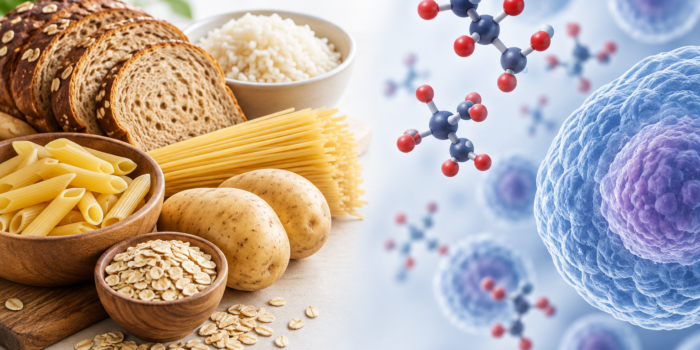
Can Cutting Out Carbohydrates Starve Cancer?
CancerSnoop Claim Check
Can Cutting Out Carbohydrates Starve Cancer?
Cancer cells often consume large amounts of glucose. But eliminating carbohydrates does not simply remove their fuel.
Your body can make glucose even when carbohydrate intake is very low, and cancers can use multiple nutrients and metabolic pathways.
Can cutting out carbohydrates starve cancer? This question comes from the observation that many cancer cells consume glucose at unusually high rates.
The idea sounds straightforward: if cancer needs glucose, perhaps removing carbohydrates from your diet will deprive the tumor of energy.
But cancer metabolism is far more complicated than simply removing sugar or carbohydrates from meals.
The Claim: Can Cutting Out Carbs Starve Cancer?
The claim says that because cancer cells use glucose, removing carbohydrates from the diet can deprive tumors of their main fuel and cause them to slow down, stop growing or die.
This idea is often used to promote extremely low-carbohydrate or ketogenic diets as a way to starve cancer.
MISLEADING
Evidence Strength: Limited
Many cancers use large amounts of glucose. However, this observation does not establish that carbohydrate restriction can selectively starve tumors or improve cancer outcomes.
Safety: Caution — Potential Harm
The Short Answer
You cannot simply starve cancer cells by removing carbohydrates from your meals.
Glucose is an important fuel for many cancer cells, but it is also needed by normal tissues. When carbohydrate intake falls, the body maintains blood glucose through several mechanisms, including making glucose from other substances.
Cancer cells can also use different metabolic pathways and nutrients depending on the cancer type and its environment.
Ketogenic diets are being studied as possible additions to cancer treatment, but they are not established cancer therapies.
What Does the Scientific Evidence Say?
Researchers have investigated ketogenic and very low-carbohydrate diets because changing the body’s available fuels could potentially influence cancer metabolism.
However, a plausible biological theory does not automatically translate into better outcomes for patients.
A systematic review by Römer and colleagues examined 46 publications covering 39 studies and 770 patients with cancer.
The studies were highly heterogeneous, often small, and many had substantial methodological limitations.
The review did not find conclusive evidence that ketogenic diets produce anti-tumor effects or improve overall survival.
These findings do not rule out future benefits in specific situations. They show that clinical effectiveness has not been established.
What We Know
Cancer metabolism can differ from normal metabolism.
Many cancer cells consume glucose at high rates. Metabolic approaches, including ketogenic diets, are legitimate areas of cancer research.
What Remains Unclear
Clinical benefits are not established.
We do not yet know whether ketogenic diets meaningfully improve tumor response, recurrence risk or survival in particular cancers or treatment settings.
Can Cutting Out Carbohydrates Starve Cancer? What Biology Shows
Many cancer cells take up glucose at unusually high rates and convert much of it to lactate even when oxygen is available.
This altered metabolic pattern is associated with the Warburg effect.
High glucose uptake is also one reason FDG-PET scans can detect certain cancers. The radioactive tracer used in these scans is a glucose analogue that can accumulate in metabolically active tissue.
However, glucose uptake varies across cancer types and individual tumors.
Important Distinction
Glucose use does not prove dietary vulnerability.
Cancer cells using glucose does not mean removing carbohydrates from food eliminates glucose from the body or selectively starves cancer while leaving normal tissues unaffected.
What Happens When You Stop Eating Carbohydrates?
Blood glucose does not simply fall to zero when you stop eating carbohydrates.
Your body can make glucose through gluconeogenesis, using substances including lactate, glycerol and certain amino acids.
When carbohydrate intake becomes very low, the liver also produces ketone bodies from fat. Many normal tissues can use ketones as an alternative energy source.
This metabolic shift is central to ketogenic diets, but it does not create a glucose-free environment around a tumor.
Therefore, the answer to whether cutting out carbs can starve cancer is not as simple as reducing dietary glucose.
What About Ketogenic Diets and Cancer?
Ketogenic diets are very low in carbohydrates, relatively high in fat and designed to produce a state called nutritional ketosis.
These diets can alter glucose, insulin and ketone metabolism. Researchers have proposed that these changes might influence some tumors differently from normal tissues.
Laboratory and animal research has provided reasons to investigate this possibility.
Human studies have examined feasibility, nutritional effects, quality of life and possible treatment-related outcomes.
However, the National Cancer Institute notes that the effectiveness of ketogenic diets for cancer symptom management and disease management remains unknown.
Research Reality
Being studied does not mean proven to work.
A diet may cause measurable metabolic changes without improving tumor response or survival.
Clinical trials must establish whether any proposed benefit is meaningful and whether it outweighs possible risks.
Do All Cancers Use Fuel in the Same Way?
No. Cancer is not one metabolic disease.
Different tumors, and even different cells within the same tumor, may use nutrients differently.
Cancer metabolism can also change as tumors grow, spread or encounter treatment.
In addition to glucose, cancer cells may use amino acids, fatty acids and other metabolic resources.
This metabolic flexibility is one reason removing a single nutrient cannot be assumed to starve every cancer.
Where Does the Claim Come From?
The claim combines several real scientific observations:
- Many cancer cells consume large amounts of glucose.
- Some tumors show strong glucose uptake on PET imaging.
- Cancer metabolism can differ from normal tissue metabolism.
- Ketogenic diets alter glucose, insulin and ketone metabolism.
- Laboratory and animal studies have investigated metabolic approaches to cancer treatment.
The misleading leap is turning these observations into the claim that simply cutting carbohydrates from meals will deprive tumors of glucose and kill them.
Could Cutting Out Carbs During Cancer Treatment Be Harmful?
Yes, particularly when a restrictive diet is started without appropriate nutritional guidance.
People receiving cancer treatment may already face reduced appetite, nausea, digestive symptoms, unintended weight loss and muscle loss.
A highly restrictive diet can make it harder to meet calorie and protein needs.
Potential Nutritional Risks
Restrictive diets require caution.
- Unintended weight loss
- Loss of muscle mass
- Inadequate calorie intake
- Difficulty meeting nutritional needs
- Constipation or reduced fiber intake, depending on food choices
- Replacing evidence-based treatment with an unproven dietary strategy
CancerSnoop Safety Warning
Cancer nutrition is not one-size-fits-all.
Someone maintaining weight and eating normally may have very different nutritional needs from someone losing weight, recovering from surgery or struggling to eat during chemotherapy.
Do not begin a restrictive ketogenic diet during cancer treatment without discussing it with your oncology team and an appropriately qualified oncology dietitian.
What Do We Still Not Know?
Metabolic cancer therapy remains an active research area.
It is possible that specific dietary or metabolic interventions could eventually prove useful for certain cancers, molecular subtypes or treatment combinations.
But current clinical evidence does not establish that ketogenic or very low-carbohydrate diets improve tumor response, prevent recurrence or extend survival across cancer patients.
Larger, better-controlled trials are needed to determine who, if anyone, benefits, under what circumstances, and whether potential benefits outweigh nutritional risks.
Related CancerSnoop Articles
CancerSnoop Bottom Line
CancerSnoop Bottom Line
Cancer uses glucose. That does not mean you can starve it by eliminating carbohydrates.
Cancer metabolism is complex. The body can make glucose when carbohydrate intake is low, and tumors may use multiple metabolic pathways.
Ketogenic diets are scientifically interesting and continue to be studied, but they are not established cancer treatments.
During cancer treatment, preventing malnutrition and muscle loss may be more important than trying to eliminate one source of fuel.
Scientific Sources
1. Nutrition in Cancer Care (PDQ®)
National Cancer Institute.
Evidence-based information on nutrition during cancer care, including ketogenic diets.
View NCI Nutrition Guidance →2. ESPEN Practical Guideline: Clinical Nutrition in Cancer
Muscaritoli M, Arends J, Bachmann P, et al.
Clinical Nutrition. 2021;40(5):2898–2913.
PMID: 33946039
DOI: 10.1016/j.clnu.2021.02.005
3. The Use of Ketogenic Diets in Cancer Patients: A Systematic Review
Römer M, Dörfler J, Huebner J.
Clinical and Experimental Medicine. 2021.
PMID: 33813635
DOI: 10.1007/s10238-021-00710-2
Questions for Your Doctor
If you are considering a ketogenic or very low-carbohydrate diet during cancer treatment, useful questions include:
- Is there evidence for this diet in my specific type of cancer?
- Could restricting carbohydrates make it harder to maintain my weight?
- Am I getting enough calories and protein?
- Could this diet interfere with managing treatment side effects?
- Should I speak with an oncology dietitian before changing my diet?
Last Reviewed: September 17, 2026.
CancerSnoop Note: This article provides evidence-based educational information and does not replace advice from your cancer care team.
Related Posts



Comments (0)