Hair loss is not inevitable with chemotherapy. Your treatment drugs and doses affect the risk. This guide explains what to expect and what to ask your care team.
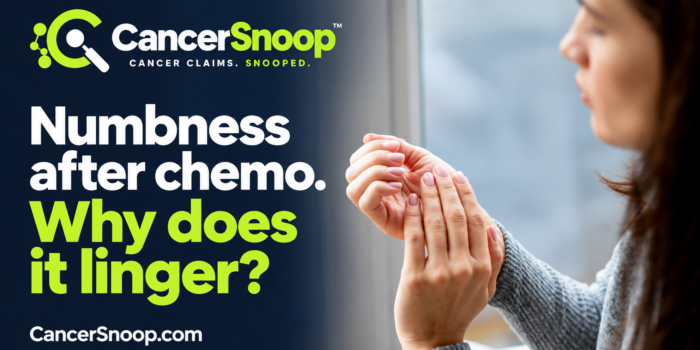
Numbness and Tingling After Chemotherapy: What Is Peripheral Neuropathy?
CancerSnoop Cancer Guide
Numbness and Tingling After Chemotherapy
Chemotherapy can end before the tingling does. Some cancer drugs damage peripheral nerves, causing symptoms that may continue after treatment.
Understanding these changes can help you describe symptoms, protect affected hands and feet, and discuss support with your cancer care team.
Chemotherapy-induced peripheral neuropathy, often shortened to CIPN, is damage to peripheral nerves caused by chemotherapy. It can affect sensation, movement and everyday activities. Reference 1.
What Is Chemotherapy-Induced Peripheral Neuropathy?
Peripheral nerves carry messages between the brain, spinal cord and the rest of the body. Certain cancer drugs can damage them. Examples include oxaliplatin, paclitaxel and vincristine. Reference 3.
Understanding Symptoms
More Than Tingling
- Numbness or a pins-and-needles sensation in the hands or feet.
- Reduced ability to notice heat, cold, pain or an injury.
- Weakness, balance difficulties or trouble using buttons and jars.
Symptoms depend on which nerves are affected. Reference 1.
Does Numbness Always Mean Chemotherapy Damage?
No. Diabetes, injury and other cancer-related causes can also affect nerves. Symptoms need assessment rather than an automatic assumption about their cause. Reference 3.
Why Can Symptoms Continue After Chemotherapy?
Nerve recovery can take months or longer. Symptoms sometimes worsen for several weeks after the responsible drug is stopped before improving. This is called coasting. Reference 3.
Some people have lasting nerve damage. A fixed recovery deadline cannot be promised. Reference 3.
What Research Supports
Treatment Depends on the Problem
The 2020 ASCO guideline supports offering duloxetine for established painful chemotherapy-induced neuropathy, while noting limited average benefit. This does not establish that it restores sensation or reverses nerve damage. Reference 2.
When neuropathy becomes intolerable or interferes with function, clinicians should assess whether chemotherapy needs delaying, reducing, substituting or stopping. Reference 2.
Evidence Gap
No Guaranteed Preventive Medicine
The ASCO guideline did not recommend a medicine for preventing CIPN. Its findings do not establish that supplements or other proposed treatments reliably prevent nerve damage. Reference 2.
Practical Steps for Daily Life
- Wear protective footwear and check your feet for cuts or sores.
- Take care with hot water, cooking and sharp objects.
- Remove trip hazards and use support when balance is affected.
- Ask whether rehabilitation or occupational therapy could help with daily tasks.
These measures support safety and function; they are not a guaranteed cure for nerve damage. Reference 1; Reference 3.
Potential Harm
Do Not Wait Until Symptoms Become Severe
Report new or worsening symptoms, particularly problems with walking, balance, dressing or using your hands. Do not change chemotherapy yourself. Reference 1; Reference 2.
ASCO also discourages acetyl-L-carnitine for preventing chemotherapy-induced neuropathy. Reference 2.
What Should You Tell Your Care Team?
Describe when symptoms started, where they occur, whether they are worsening and which activities they affect. Ask what needs assessment, what support is available and whether treatment changes are appropriate. Reference 1; Reference 3.
CancerSnoop Bottom Line
Persistent Numbness Deserves Attention
Report symptoms early, protect affected hands and feet, and discuss a plan that considers both cancer treatment and everyday function.
Sources & References
Reference 1
National Cancer Institute
Nerve Problems (Peripheral Neuropathy) and Cancer Treatment.
Reference 2
Loprinzi CL, et al. — ASCO Guideline Update
Prevention and Management of Chemotherapy-Induced Peripheral
Neuropathy in Survivors of Adult Cancers.
Journal of Clinical Oncology. 2020;38:3325–3348.
DOI: 10.1200/JCO.20.01399 · PMID: 32663120.
Last reviewed: October 30, 2026.
This guide provides general information and does not replace assessment or advice from your cancer care team.
Continue Exploring