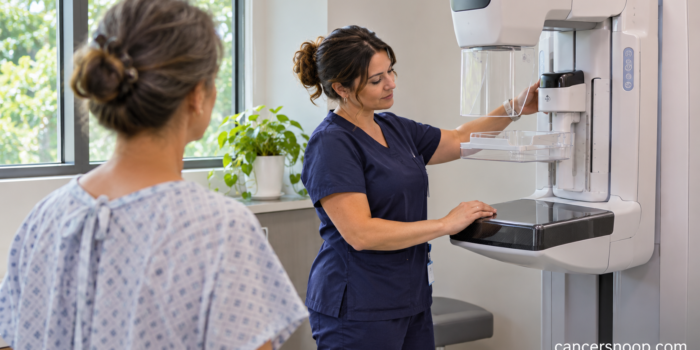
A mammogram after lumpectomy looks for changes in the remaining breast tissue. After breast-conserving surgery and radiation, the first examination is often scheduled about 6 to 12 months after radiation ends. Confirm your timing with the team that manages your follow-up.

Colon Cancer Follow-Up After Treatment: Which Tests Check What?
CancerSnoop Follow-Up Guide
Colon Cancer Follow-Up After Treatment: Which Tests Check What?
Colon cancer follow-up combines appointments, blood tests, imaging and colonoscopy according to your treatment history. Here is what each part can contribute.
| Test Name | Clinical assessment, CEA, CT and colonoscopy follow-up |
|---|---|
| Test Type | Other |
| What It Measures | Several complementary tests and clinical assessments used after colon cancer treatment. |
| Used For | Look for recurrence or new bowel lesions and assess recovery and treatment effects. |
Why does the plan include several different tests?
Colon cancer follow-up brings together information from different sources. An appointment gives you time to describe changes in bowel function or recovery. A blood test may track a marker that was useful before treatment. Imaging examines areas inside the body, while colonoscopy directly examines the bowel lining. Your team chooses a combination that fits your stage and the treatment you received. Ask for the purpose of each scheduled test, particularly if the plan changed after your last appointment. [1]
Start with the treatment summary
Before comparing your schedule with another person's, check what the follow-up plan follows. Surgery for an early colon cancer, treatment of a rectal cancer and treatment of liver metastases can lead to different plans. The plan should identify who is coordinating care, who orders the tests and who explains the results. A written summary also helps your primary care clinician understand the treatment you received. Keep a copy with the appointment schedule so that a missed booking is easier to spot. [1]
What does a CEA blood test contribute?
Carcinoembryonic antigen, usually shortened to CEA, is a protein measured in blood. Some colorectal cancers produce enough for the result to be useful during follow-up. A change can prompt the team to investigate, but a single number does not locate a problem. When reviewing the result, ask whether CEA was elevated when your cancer was first diagnosed and whether the current result changes the plan. You can read the separate CancerSnoop CEA guide for a fuller explanation of this marker. [2]
What is the imaging appointment looking for?
A surveillance scan helps the team look for changes in areas such as the liver and lungs, according to the body regions examined. The report can identify a finding that needs closer assessment or compare a previously seen area with an older scan. Ask whether your prior images were available for comparison and which regions the current examination covered. The recommendation might be to continue planned surveillance or to answer a particular question using another examination. Those are different next steps, so make sure the plan is clear. [2]
Why is colonoscopy on a separate schedule?
Colonoscopy lets the clinician examine the bowel lining and remove many polyps or take tissue samples. Routine CT surveillance and colonoscopy therefore provide different information. In follow-up, the team considers whether the whole colon was examined around the time of surgery, what previous polyps showed and whether there is an inherited risk condition. Ask which previous examination your next date was calculated from. The colonoscopy article in this series explains why a person with reassuring scans may still have an endoscopy appointment. [3]
What else belongs in follow-up?
Follow-up visits also cover the effects of treatment and everyday functioning. Write down persistent numbness, changes in bowel habits or difficulties with eating and daily activity so the team can discuss them. You do not need to wait for a scan result to ask for help with a treatment effect. Ask which clinician should handle each concern and how to make contact between routine visits. If the team has given you instructions for urgent symptoms, keep them alongside the follow-up plan. [1]
How do you use the plan without turning it into another job?
Keep one page with the test name, the expected date and the person responsible for explaining the result. After a test, record the agreed next step rather than trying to interpret every phrase alone. At the end of an appointment, repeat the plan in your own words and ask whether you understood it correctly. This is especially helpful when several hospitals are involved. It gives you a way to check that a referral, scan or colonoscopy has actually been arranged. [1]
When should you ask for a results conversation?
Ask when results are normally reviewed and whether the service contacts you even when the findings are reassuring. If another test is recommended, ask which clinician will discuss the results together. You can say, “Please tell me what this test checked, what you concluded and what happens next.” That phrasing is useful when the portal report and your appointment are several days apart. It also helps a family member who attends with you record the same plan and follow up if an appointment is missing. [1]
Sources and References
- Living as a Colorectal Cancer Survivor
- Colon and Rectal Cancer Follow-Up Care Expanded Version
- Colonoscopy surveillance after colorectal cancer resection
Evidence coverage: guidance and educational sources were checked for this guide. Recommendations are described within their clinical scope. This educational article does not replace your care team’s interpretation of your results.
Continue Exploring