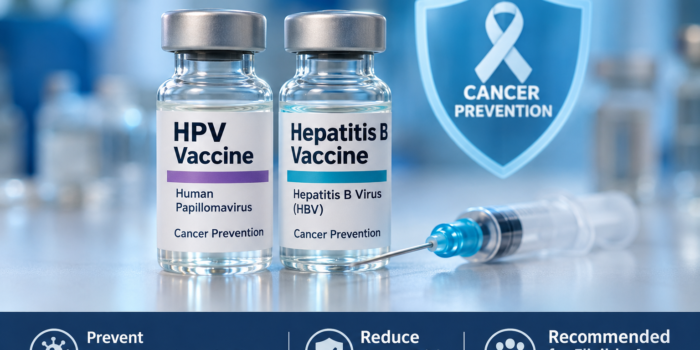
Vaccines that prevent cancer work by preventing infections that can lead to cancer years later. Two important examples are HPV vaccination and hepatitis B vaccination.

Did COVID-19 Reduce Early Gastric Cancer Detection in South Korea?
CancerSnoop Research Explained
At a glance
COVID-19 impact on gastric cancer diagnosis: Yes, the COVID-19 pandemic led to fewer stomach cancer screenings and claims for gastric cancer diagnoses in South Korea. This reduction was especially noticeable during the first months of the pandemic in early 2020. Reference 1
| Main finding | Claims for EGD and gastric cancer dropped by over 5% in 2020 compared to 2019, with largest decreases in March and April 2020. |
|---|---|
| What remains unclear | Claims data cannot show if fewer procedures led to delayed cancer diagnoses or worse patient outcomes. |
Evidence Coverage
This CancerSnoop article is based on published abstracts and selected full-text excerpts from the main study.
In This Article
What Did the Researchers Study?
Researchers used health insurance claims data from across South Korea to compare how many esophagogastroduodenoscopy (EGD) procedures, gastric cancer diagnoses (including early and advanced stages), and gastric cancer operations were billed in 2019 (before the pandemic) versus 2020 and 2021 (during the pandemic). This nationwide study tracked changes over time to evaluate the pandemic's impact on gastric cancer-related healthcare.
What Did the Study Find?
In 2020, claims for EGD procedures decreased by 6.3% compared to 2019. Claims for gastric cancer diagnoses fell by 5.0%, for early gastric cancer by 4.7%, and for advanced gastric cancer by 3.6%.
Claims for gastric cancer operations dropped by 8.8% in 2020 but slightly increased by 0.9% in 2021. The largest monthly decreases happened during the first wave of COVID-19 in March and April 2020.
For example, EGD claims dropped by 28.8% in March and 17.2% in April compared to those months in 2019. Claims reductions were less severe during subsequent waves in 2020 and 2021.
These data show that the pandemic caused a temporary but significant decline in stomach cancer testing and diagnosis claims.
How Does the Supporting Research Fit?
Another nationwide study in South Korea confirmed that claims for gastrointestinal endoscopy procedures like EGD and colonoscopy declined in 2020, especially during March and April, supporting the finding of reduced non-urgent procedures early in the pandemic. However, urgent procedures such as ERCP were less affected, reflecting prioritization of critical care.
This second study supports the reality of reduced endoscopy services during the pandemic but does not independently confirm changes in cancer diagnosis rates.
What Does the Guidance Say?
Gastric cancer is common in South Korea, where regular screening with EGD helps detect cancers early, improving survival chances. One hospital study found that longer observation times during EGD exams were linked to better detection of early cancers, suggesting that thorough exams are important.
Reduced and delayed endoscopy during COVID-19 could therefore lead to missed early cancers and worse outcomes but this has not been directly proven.
What Remains Uncertain?
This study relied on billing claims data, which records how often procedures and diagnoses were claimed but does not capture actual patient outcomes, disease progression, or reasons for declines in procedures. Therefore, it cannot prove whether fewer claims caused delays in cancer diagnosis or affected survival.
The observational data also lack clinical details needed to fully understand health impacts.
CancerSnoop Bottom Line
CancerSnoop Bottom Line
The COVID-19 pandemic caused significant, short-term drops in endoscopy and gastric cancer claims in South Korea, especially during the first pandemic wave in early 2020. Although claims partially recovered later, the early disruption may have delayed stomach cancer detection. However, because this study used insurance claims data, it cannot confirm effects on patient health or cancer outcomes. Further research is needed to clarify the consequences of these declines on diagnosis and survival.
Sources and References
Reference 2
Impact of COVID-19 Pandemic on Performance of Gastrointestinal Endoscopy.
The Korean journal of gastroenterology = Taehan Sohwagi Hakhoe chi 2023 Nov 25
PMID: 37997220 · DOI: 10.4166/kjg.2023.102
Reference 3
Interval Advanced Gastric Cancer After Negative Endoscopy.
Clinical gastroenterology and hepatology : the official clinical practice journal of the American Gastroenterological Association 2023 May
PMID: 36075502 · DOI: 10.1016/j.cgh.2022.08.027
CancerSnoop Note: This article provides educational information. Discuss decisions about cancer care with your care team.
Continue Exploring