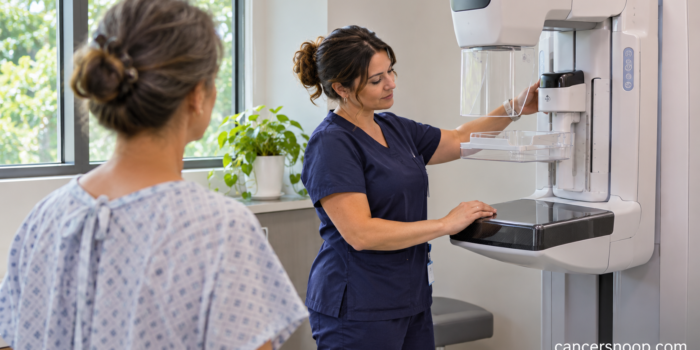
A mammogram after lumpectomy looks for changes in the remaining breast tissue. After breast-conserving surgery and radiation, the first examination is often scheduled about 6 to 12 months after radiation ends. Confirm your timing with the team that manages your follow-up.

Perineural Invasion in Colon Cancer: How to Read Your Report
CancerSnoop Pathology Guide
Perineural Invasion in Colon Cancer: How to Read Your Report
Perineural invasion in colon cancer means the pathologist saw cancer growing around or into a nerve in the tissue examined.
| Specimen | Colon surgery pathology report |
|---|---|
| What is assessed | Cancer growing around or into a nerve in the specimen |
| How it may appear | Present or not identified in the examined sections |
What does perineural invasion look for?
The pathologist studies the relationship between cancer cells and a nerve under the microscope. Perineural invasion, often shortened to PNI, is a description of that local relationship. The report may list the finding in a checklist even when the patient never noticed a symptom related to a nerve. Look at the pathology line itself to see what the pathologist reported. [1]
How is this different from lymphovascular invasion?
Perineural invasion describes cancer associated with a nerve. Lymphovascular invasion describes cancer within a lymphatic or blood vessel. These findings answer separate questions and can be reported together. A pathology report can also show either finding while the examined nodes are negative. The lymph node section and the TNM stage summarize other parts of the assessment. [2]
Does it establish spread to a distant site?
The nerve finding comes from tissue removed and examined. It does not establish distant spread. If you are trying to understand whether cancer was found elsewhere, ask what the staging assessment showed. The M category addresses distant spread, and the team determines it from the information available for your case. [4]
Why does the oncology team ask about it?
In stage II colon cancer, ASCO lists perineural invasion as one of the features that can support offering chemotherapy after surgery. A positive finding does not determine that decision by itself. The team weighs other pathology findings, mismatch repair status and the expected benefits and harms of treatment. [3]
Two questions for the postoperative visit
Ask which part of the specimen showed perineural invasion and what the finding changes in the overall assessment. Then ask how the team would explain the recommendation if you put the pathology report aside and used plain language. If you are waiting for a multidisciplinary review, ask when the findings and options will be discussed with you. [2]
Sources and References
- Protocol for the Examination of Resection Specimens From Patients With Primary Carcinoma of the Colon and Rectum
- Understanding Your Pathology Report: Colon and Rectal Pathology
- Adjuvant Therapy for Stage II Colon Cancer: ASCO Guideline Update
- Colon Cancer Treatment (PDQ®)–Health Professional Version
For general education. Your care team can interpret your individual pathology report.
Continue Exploring